
Know when the sap will run.
Sap flows when cold nights meet thawing days. We read the forecast for your trees, give you the tapping dates for your state, and do the sugarhouse math — free.

The LuckySap app for iPhone — free to download.
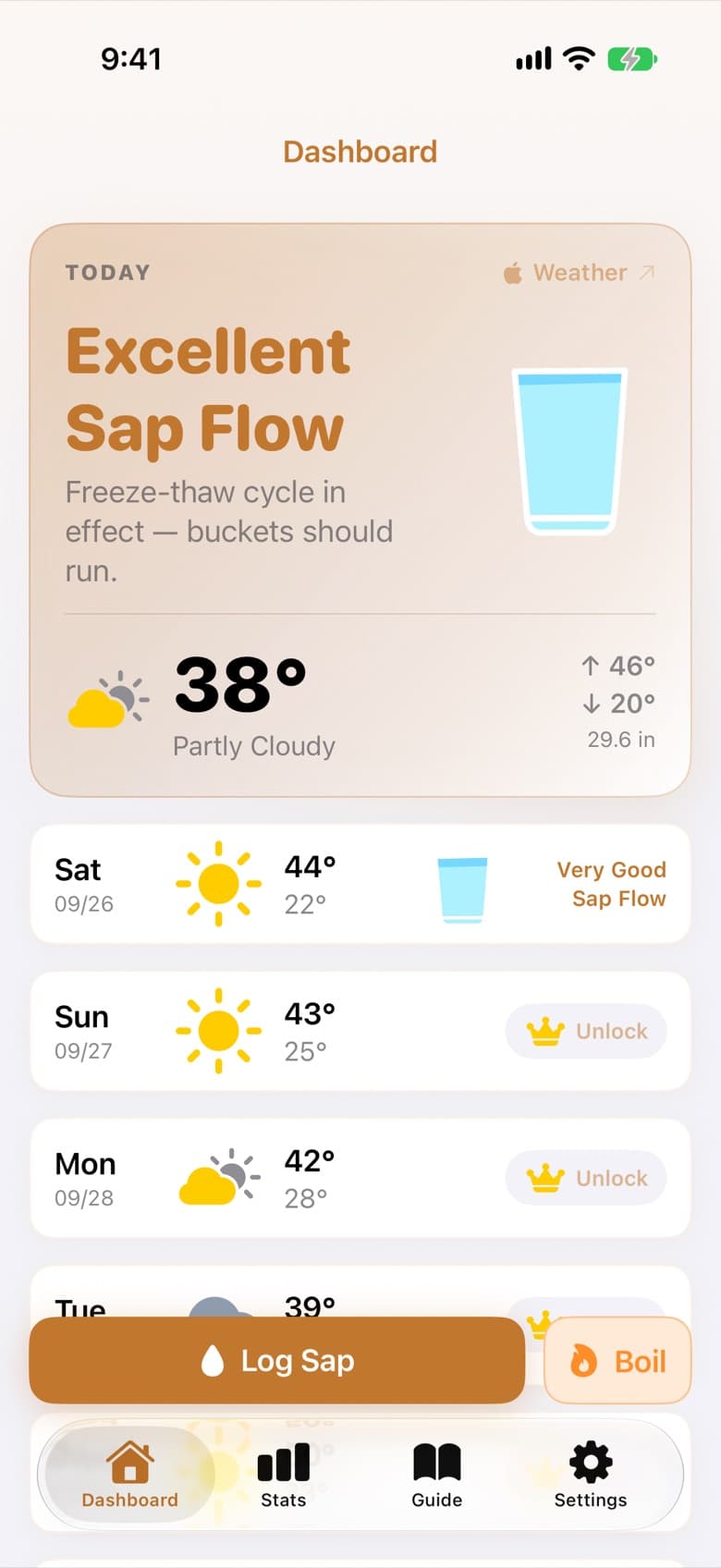
The first runs usually reach Ohio in 145 days.
Free sugaring calculators
Sap to syrup calculator
Gallons of sap in, syrup out — using the updated Rule of 86.
Finishing temperature
Water's boiling point + 7.1°F — worked out for today.
Hydrometer correction
Correct any reading to 60°F and check your density.
Taps per tree
Measure the trunk, get a safe tap count.
Yield estimator
Taps × collection method = your season, in syrup.
Cost per gallon
Fuel + bottles + gear = your break-even price.
Your whole season, in your pocket
A sap-flow outlook for your trees
Today's call and the days ahead, from your local forecast — with an optional alert the evening before a strong sap day.
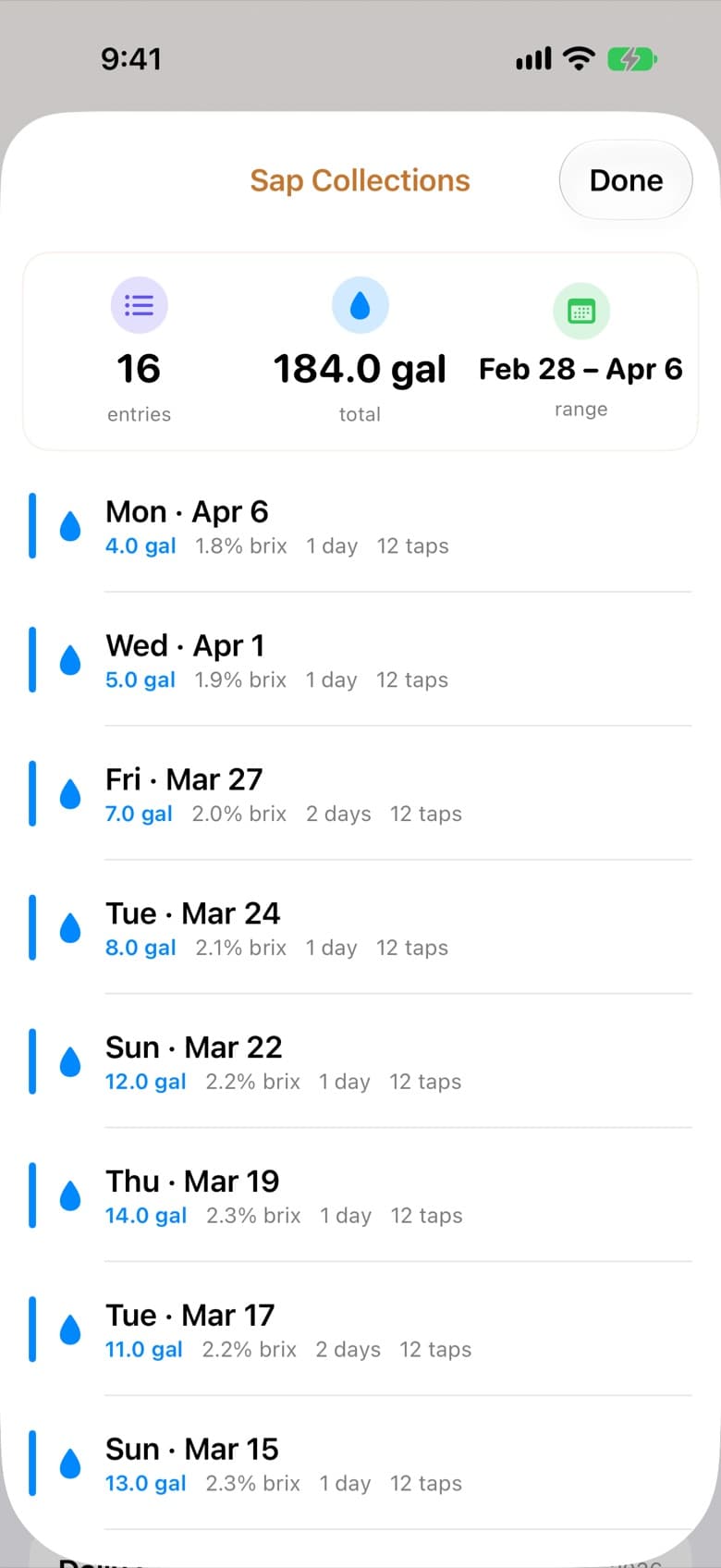
Log a collection in seconds
Gallons, sugar, taps — and every boil, with sap in, syrup out, hours, and grade.
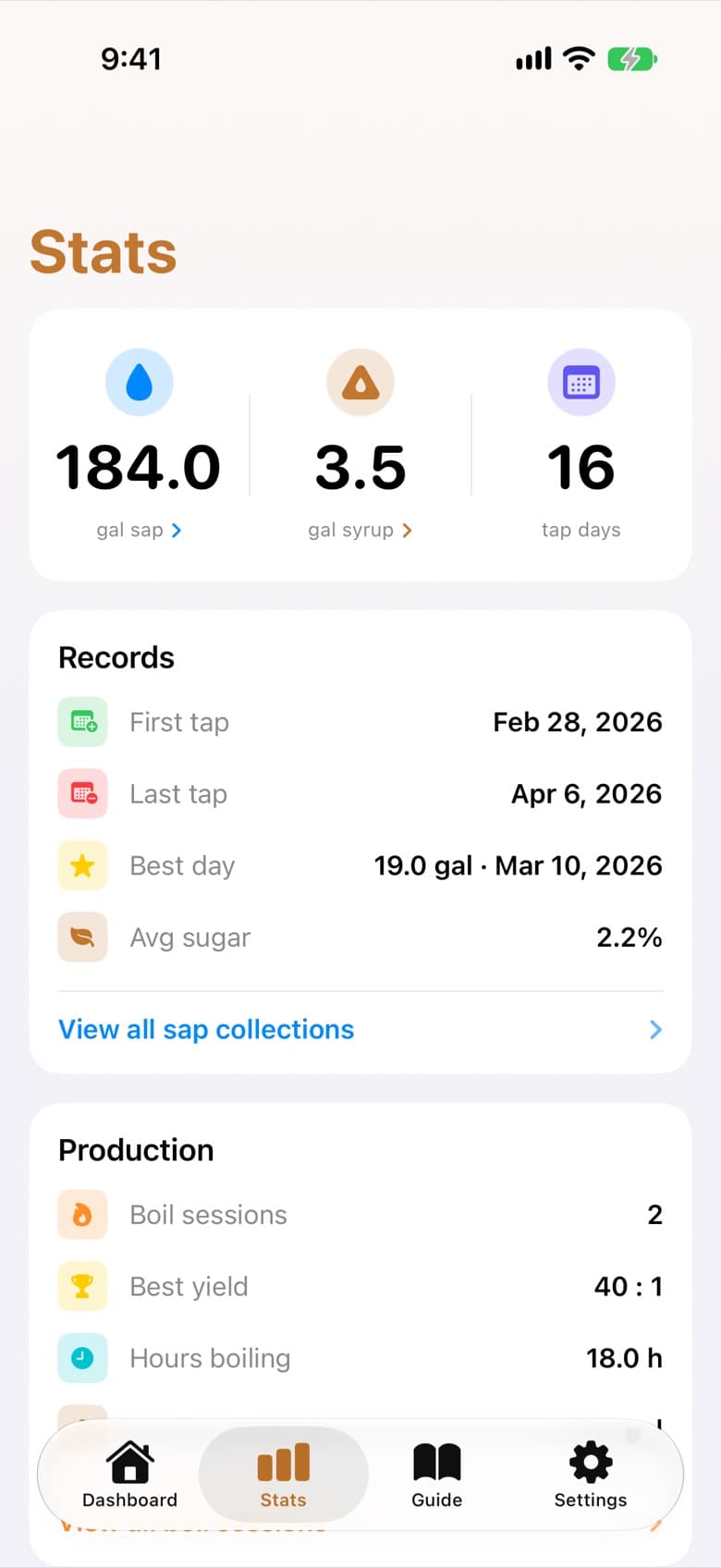
See how the season's going
Season totals, records, sap-to-syrup ratios, and this year against last.
Sugaring 101, built in
Tapping, collecting, boiling, and finishing guides for when you're standing at the tree.
Which of my trees can I tap?
Tell sugar maple, red maple, silver maple and more apart in winter — bark, buds, and the one-second branching test.
Can I sell my maple syrup?
Licenses, labels, and density rules for 10 states and provinces — built from the official rules.
The questions every new tapper asks
When should I tap my maple trees?
Tap when days start climbing above freezing — around 40°F — while nights still drop below it. For most of the maple belt that's February or early March; USDA's state-by-state averages run from early February in West Virginia to about March 10 in Wisconsin, and the date can swing three to four weeks from one year to the next. Watch the 10-day forecast for a stretch of freeze-thaw days rather than a calendar date.
Can I tap too early?
Yes. Tapholes slowly dry up and seal over — usually within 6 to 10 weeks — so tapping weeks before the real season can cost you the late runs. Tap when a run of freeze-thaw days is actually in the forecast.
What temperatures make sap run — and why did it stop?
Sap flows when wood temperature swings across 32°F: a freeze reloads the tree, a thaw pushes sap out. Field research counts a freeze-thaw day as a low under 30°F and a high over 37°F; the classic sap day is a night in the 20s followed by a day in the 40s. Without a new freeze, flow keeps going for 30 to 72 hours and then fades.

Log every run. Know your season.
LuckySap is the maple syrup tracker for iPhone: a sap-flow outlook for your trees, a quick log for every collection and boil, and season stats you can compare year to year. Free to download.